|
I'm excited to announce that I have been appointed as the 'Team Great Britain' coach for the upcoming AIDA World Apnea Depth Championships 2026, this year hosted in Limassol Cyprus. I will be coaching and aiding the British athletes in and out of the water aiming to assist them to achieve their full potential during the competition. Look out for Instagram stories during the competition to find out how it's going and I will post another blog post on here after its conclusion to reflect on the experience I have had and to let you know how it went. DATES: 27th September to 10th October 2026 You can find more information including schedule and athletes HERE By David Watson, Owner, Founder & Head Instructor / AIDA Instructor Trainer at One Breath Freediving
1 Comment
Summer is finally starting and it is time to make some freediving plans and create some magic freediving experiences! Once again, in September this year, I will be leading a freediving Training and Exploring fortnight on the beautiful Mediterranean islands of Malta & Gozo. This is the perfect month to visit, with warm clear water and a more relaxed vibe than in peak summer. As always, all freediving is led by myself in a small group, planned and customised and we will be visiting the best dive sites on the islands! Expect super visibility, caves, swim throughs, tunnels and wrecks of various depths and sizes and of course training gains and technique progress on those line sessions! So in this blog post, in anticipation of the trip, I wanted to share..... ‘The 5 Things I am Looking Forward to for the 2026 Malta & Gozo Expedition’ Training session 1. That Blue, Blue Water Malta has some amazingly clear water with 30m+ visibility at many dive sites, meaning on occasion you can see the shipwrecks we are diving to from the surface! And of course the Mediterranean Sea has such a special colour to it, mixing various shades of blue from dark to light and all in between. 2. Looking For 8 Legged Friends The Mediterranean Sea is not renowned for its abundant marine life, but one creature that can usually be encountered is the Common Octopus. Highly intelligent and curious, octopuses can often be found in water that is shallow (10m or less), and if approached carefully, will often come out to interact with us freedivers. 3. Shipwrecks Within Reach Malta has been proactive in creating artificial reefs since as far back as the 1990’s, meaning there are some well established underwater features that attract marine life and divers alike. One, the Um El Faroud, is one of the most impressive shipwrecks in the Mediterranean at over 115m long and sitting at 35m on a clear sandy bottom, it is stunning to encounter while freediving. 4. Playing with the DPV As in 2025’s Expedition, I will be returning with my Lefeet S1 PRO underwater scooter! Amazing for exploring and zipping around wrecks, it's a great way to feel like ‘flying’ through the water and to save energy for longer dive times, and of course on the session you will also get the opportunity to experience it. Getting ready to dive on a wreck 5. The stunning Geology (above & below water) The Maltese Islands feature spectacular limestone cliffs that turn into underwater drop-offs. And the soft limestone means that impressive underwater features such as huge boulders, arches and outcrops have been created by the water erosion from the sea over the years, leaving fascinating features to be explored while freediving. By David Watson, Owner, Founder & Head Instructor / AIDA Instructor Trainer at One Breath Freediving .
I'm really pleased to announce I am a Sea Shepherd 'Divers for the Ocean' Ambassador!. For a long time I have been an advocate of the hard work done globally for the oceans by Sea Shepherd. And with this news I am announcing that I am participating in the #fitfortheocean challenge to raise money and awareness for Sea Shepherd! I will be undertaking the following:
You can read more about the 'Fit For The Ocean' Challenge here: https://www.seashepherdglobal.org/fit-for-the-ocean/ You can sponsor me here: https://www.ouirace.com/en/challenge/10km-swim-to-protect-our-oceans-2026 By David Watson, Owner, Founder & Head Instructor / AIDA Instructor Trainer at One Breath Freediving
This September I will formalising a concept, something I have enjoyed doing myself for years, and something I have promoted among my freediver students since I became an instructor myself! This can be called 'Freediving Exploring' or maybe others might think of it as recreational freediving (or even advanced snorkelling!). In essence it is using freediving as a means to explore the marine environment and discover the underwater surroundings, the difference is it will have formalised planning, protocols, safety and equipment set-up specifically for the task of freediving exploring on the move. As freediving has so many possible directions that can be taken, it is often up to the instructor of the initial freediving course(s) that you take as to which direction you proceed (depth training and competition are at the forefront for the majority of instructors). One certainty is that all freediving courses are based around learning and practicing motor skills with the aim of meeting a performance time or distance/depth requirement. This, of course, is for good reason, as like it or not freediving IS a sport. Many people that get into freediving might not see themselves as the 'sporty' type, but by definition it is a physical activity that you need to practice and train to get better at and contains a competitive element (often this can be competition against self, i.e; to beat your own PB's). But why does this have to be the end goal or outcome objective in itself? That if you are not going deeper or longer each week, month or year you are not doing it 'right'. I have often said to my students that a good rationale to aim to be able to do a 30m deep training dive is that subsequently it will make a 10-12m reef dive seem super comfortable and therefore more enjoyable. There is the quote that gets often thrown around that "Scuba divers look outside while freedivers look within themselves". I'm suggesting that freedivers can also look outside! This might seem obvious, but I have even taken very experienced freedivers out and shown them for the very first time the joy of NOT line training for once, but exploring and appreciating the marine environment. Those that have trained with me, know that I am always one to make a detour to the reef, visit a swim through or locate a octopus hideout :) at the end of an open water training session. If this is the reason you wanted to freedive in the first place then why not make this the session?! What are some objectives of a Freediving Exploring session?: ✅ Observing the nature of marine life and marine habitat ✅ Having fun, enjoying the process of diving and being playful and curious in the water ✅ Learning to explore and freedive with buddies in a safe way ✅ Achieving different goals; going through a tunnel or seeing an octopus for the first time ✅ Helping the marine environment; observing habitat change, collecting trash etc Why go with a qualified freediving instructor for guided freediving exploring?: ✅ Knowledge of where all the good stuff is located! Wrecks, caves, swim throughs etc ✅ Safety as the priority allowing you to dive and explore knowing that you have your own safety diver watching you ✅ Extensive knowledge to share on the marine environment and wrecks I am going to expand on this subject and in future blog posts I am going to look at:
So look out for these posts at a later date! Let me know your thoughts in the comments section and thank you for reading this blog post. By David Watson, Owner, Founder & Head Instructor / AIDA Instructor Trainer at One Breath Freediving .
Just announced! One Breath Freediving is returning to Malta & Gozo for a specific Exploring Freediving Expedition. Led by myself, with 15 years experience of guiding divers around the Maltese islands we will explore together in a small group the best locations at the best time of year! Below is a little video of a cool exit from one of my favourite caves, at Anchor Bay, where you can actually surface inside! And of course Malta is famous for its wrecks, and the Tug2 is a perfect one for freedivers as its depth of just 12-20m allows lots of time for exploration. This exploring expedition has limited spaces available and will be run over two weeks, so you can either join one or both for maximum fun! 15th-20th September 22nd-27th September Get in touch for more information and to book! By David Watson, Owner, Founder & Head Instructor / AIDA Instructor Trainer at One Breath Freediving
In freediving, terms such as these three are thrown around quite liberally! Let's look closer at what they mean and how they can fit into the sport of freediving. Firstly some dictionary definitions: INSTRUCTOR:
COACH
MENTOR
As you can see from the definitions, not all instructing involves coaching, and not all coaching involves mentoring! Klasen and Clutterbuck (2012) define the roles of coaching and mentoring as: Coaching includes: "determining and specifying an individual's learning needs and objectives in relation to work issues; working out how the individual is going to improve performance deficits; helping the individual to explore the problem;, develop alternative solutions and decide which one to implement and how; and using appropriate and timely feedback". Mentoring includes: "supporting individuals in discovering and defining their own development needs and setting their own objectives; fostering independent learners; allowing individuals to raise and talk about their issues, occasionally clarifying, reflecting back and challenging; helping individuals to reflect on their beliefs, feelings, thoughts and behaviour". At One Breath Freediving David has been a freediving instructor since 2012 and is one of AIDA Internationals most experienced instructors with over 500 student certifications. Also holding an Honors degree in Sport & Exercise Science with core modules on sports coaching and he is a member of UK Coaching in The Charted Association of Sport & Exercise Sciences. Since creating a specific teaching and coaching philosophy and dedicating his business to small group and personalised learning he is in the ideal position to offer freediving instruction and coaching using mentoring as a key foundation. By David Watson, Owner, Founder & Head Instructor / AIDA Instructor Trainer at One Breath Freediving
I'm not sure this counts as 'clickbait', but I expect that many of you reading this will be expecting me to list tips and tricks of how to overcome those sneaky IC performance requirements such as 40-50m Constant Weight or 90m Dynamic or the favourite, 5x 20m. Well, no. These performance requirements are the minimum standard to just ATTEND the Instructor Course, so should already be ticked off and being ready for them should be a given. Unsurprisingly, as the name suggests, the freediving instructor course is about the Instructor Trainer (IT), teaching you, the candidate, how to teach others freediving. There needs to be a mindset change (which may have happened to you, at least partially, on the AIDA4 Course as this is also Assistant Instructor level). This change needs to be mainly focussed on your new found responsibility for the safety and wellbeing of others under your care, your responsibility for teaching freediving correctly to a high standard and also maintaining the positive image of the sport for everyone. In no particular order...... #1 Build a Base Knowledge: There will be stuff you don't know. There will be stuff you know but not well enough to explain properly to others. Start working on this as students will have lots of questions. And it is sometimes ok to say that you don't know but will find out. So stay humble and keep a folder of topics you came across but didn't have time to read. Or subjects that you would like to understand better yourself for the future. Keep learning and look at ways teaching is conducted in other sports or areas of life and think what can transfer over successfully in to teaching freediving. #2 Start Observing: As an instructor you need to be observant and spot mistakes so you can correct them and even spot impending mistakes before they occur. Start watching your buddies and other freedivers at what they do differently to you. And remember, we do not need to always be critical with this. Often there is more than one way to do something well, so then question why you do what you do, the way you do it. Try new things out and evaluate the pros and cons and have alternative methods ready as a back up in your freediving 'tool box'. #3 Consider Safety: This is of paramount importance, but I think it only really dawns on people when they realise things can go wrong while undertaking theoretical course teaching on the instructor course (plus realising there is a whole chapter on 'risk'). The reality is that you are responsible for others during this outdoor activity that we all love. Question yourself; 'Is how I conduct myself safe?'. Think about what you allow others to do in your presence. Think about your equipment set up and your rescue and CPR training. Is it up to scratch or are you just hoping that nothing will go wrong? #4 Accept You Are Not Good At Everything (and work on these things!): No one is perfect, or even good at everything. As humans we tend to stick with what we are good at or enjoy the most. But the things we need to work on most are generally the things we don't like so much. So spend time looking at the lesser aspects of our freediving self. Never been into DNF (Pool No-Fins)? Well give it a go and accept that the first tries will suck but then you will gradually improve. Never fully understood Dalton's law? Try explaining it in it's simplest form to someone who does not even dive. With practice you will become more comfortable and get better, if maybe never fully enjoying some things. This brings us to..... #5 Keep Improving The Basics: It is easy to get lazy with the things we think we know or can do well already. Lets take the duck dive. How many of use got good at it at about AIDA3 level and then never thought much about it again? Quite a few I expect. This is called 'Unconscious Competent', when we can do something well without thinking too much about it. To be an instructor we need to teach these skills to someone at the other end of this spectrum ('Conscious INcompetent': who thinks hard about doing a skill, but still cannot get it right). So we need to be able to DEMONSTRATE skills to a high level for students of a much lower level, so things needs to be fluid, precise and correct in any demonstration we give. Start getting good now. Strive to make every aspect of your dives to the highest standard. By David Watson, Owner, Founder & Head Instructor / AIDA Instructor Trainer at One Breath Freediving
In this blog post I wanted to discuss something different; let's look how we can apply lessons from freediving to everyday life! So, here are 5 things freediving can teach us about life: #1: Patience is Vital Freediving is one of the few sports where you can't just push harder to get better, more often than not progress can be slow and a myriad of external factors can mean that the dive doesn't always go as expected. What better way to remind us that we sometimes need to bide our time and be more patient to achieve the outcomes we want. #2: We need People Many sports and training sessions have teams, or maybe two people playing in rivalry, but few require two people working together and looking after each other. Yes, it can sometimes be a pain to find a buddy, but it is in a good lesson in receiving outside help and trusting someone else, essentially with your life. #3: Live in the Moment Freediving is literally taking a single breath, which really makes things during this relatively short duration of the dive, pass in slow motion, meaning many sensations and momentary details are noticed as our senses are essentially on high alert. During the breath hold, one hour in the future does not matter. What happened yesterday does not matter. This is being in the moment of the dive and has been likened to an 'underwater meditation' where we are truly feeling the present moment to the fullest. #4: Not Everything Goes to Plan Yes, plans can be made, and we know what we would LIKE to happen, but there are few reality checks like a freedive, with so many variables at play, be it internal or external. We more frequently than not, have to learn to let go and accept what we are dealt in that moment, dive, or session. Acceptance of circumstances outside our control is also a valuable life lesson. #5: Nature is Awe-Inspiring Being in the water where we can experience weightlessness and with the water, light and marine life around us, really gives us a connection with nature that is much harder to achieve on land. Combined with 'being in the moment' on a single breath multiplies the sensation and seems to bring back some distant sensations of humans connection with the natural world. What do you think, are there any others that could be on this list? Let me know in the comments section. By David Watson, Owner, Founder & Head Instructor / AIDA Instructor Trainer at One Breath Freediving
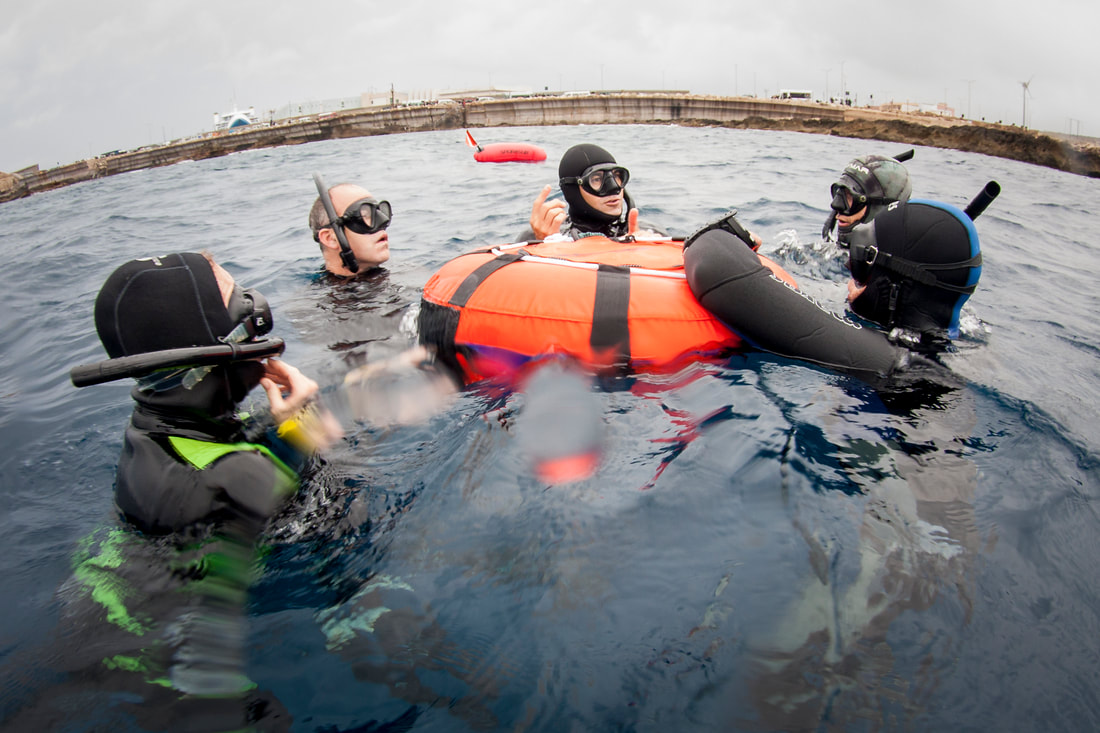
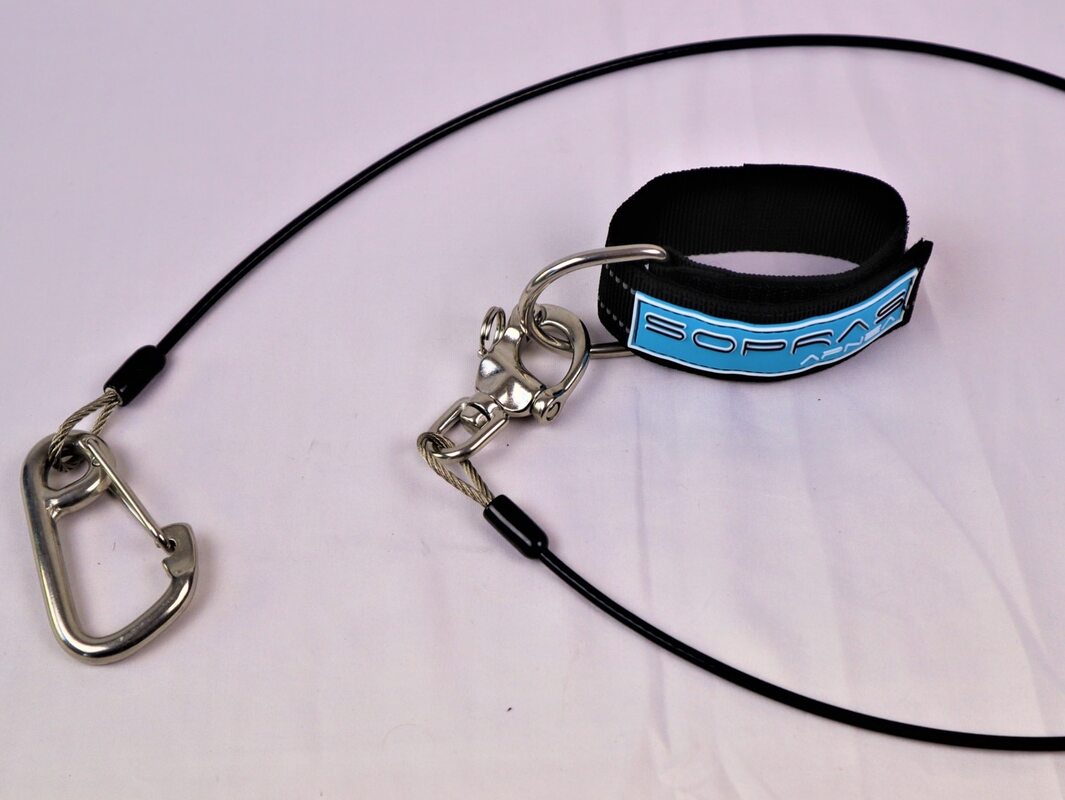
As you will have learnt in you early freediving course(s), done properly, freediving is an extremely safe sport where we use the buddy system to watch each other and of course the golden rule is to NEVER FREEDIVE ALONE. Following from that we learn how to recognise and then rescue from both a black out (BO) and Loss of Motor Control (LMC), repeated on every course and from each discipline of freediving (pool and open water). Next comes never pushing your limits and paying attention to your own personal condition, both mental and physical (tiredness, cold, hydration, relaxation/stress etc), learning to dive conservatively and within our limits But in this blog post I wanted to cover what I consider to other less considered or overlooked aspects of safety. In over 12 years of teaching freediving I have made mistakes (and learned from them!), seen others making mistakes and heard about other peoples mistakes, accidents or close calls. So here are what I consider to be the 5 top overlooked aspects of freediving safety: #1: Maintaining Equipment With time and use your equipment degrades and even more so if it is not looked after properly and cleaned after dive sessions. I have seen (and even had!) fins snap, weight belts break, carabiners fail, masks break.... the list goes on. In the majority of cases it is not a single failure it is degradation over time, which can be visible and therefore preventable. So what can you do? Visually check all equipment as you assemble it for your dive session. And every 6 or 12 months do a more thorough check. This is especially important if you have not used equipment for a period of time and it has been in storage. Replace equipment BEFORE it breaks to prevent a problem occurring in the first place. Prevention is always better than having to react to a bigger problem, or even accident, caused by improperly maintained equipment. #2: Communication Beginner freedivers especially, but all recreational levels (and beyond!) seem to forget that if you have a buddy, you actually need to tell them what you are doing. Often it is a shock for freedivers after their course is completed, when they don't have a paid safety diver (the instructor) anymore, and the person they are now accompanied by is not 100% there to watch and help them the whole session. However, you should both be 100% invested in helping each other as buddies although it is not your paid job, it is of course mutually beneficial. Just some people are better at it than others. But as much as we would like to be, people are not mind readers, so remember to take time to discuss the key topics of a dive, including but not limited to; depth, discipline (dive type), time etc (WHERE will you go, HOW will you get there, WHO will help you if needed, WHEN will you be back). Sounds easy but is often not done properly. #3: Exploring is different to line training Diving using a buoy / rope / weight / lanyard set-up makes things much much easier to do deeper and more efficient freedives. This is often overlooked and when recreational freedivers dive on the reef to explore they often mistakenly assume they can achieve the same depths or times. This is incorrect. Having a buoy (to rest on), a rope (to take you in a straight line and turn on), a weight (to allow you to 'pull' up or down if needed) and a lanyard (to keep you safely close to the line) all make a huge difference to how easy and relaxed the dives are, but more importantly how safe. So much so, that when diving off the line you should reduce your maximum depth by at least ONE THIRD. Therefore, if you are a 20m diver on the line, your recreational off-line diving depths should be limited to 13-14m range for the purpose of safety. #4: Pay Attention Paying attention is an important safety aspect, but does sound rather broad and vague, so let me elaborate. This can be applicable to three main areas: 1) Yourself 2) Your buddy 3) Other factors (such as weather and equipment). As an example, it is not uncommon while teaching for me to see a freediver about to dive with either no lanyard attached (forgotten) or a lanyard on the wrist but the other end is still attached to the buoy and not the rope. So both the freediver has not noticed this AND the buddy has not noticed this. Now this is not uncommon for new freedivers as they learn and have lots to think about, but once diving independently details such as this matter (for both safe and enjoyable dives). Also, are you noticing if you are getting more tired or colder or heavier contractions etc? Maybe time to stop the session. Did you notice that the waves are getting bigger or the current getting stronger or visibility deteriorating? Maybe time to stop the session. You get the idea. #5: Weight is NOT fixed What do I mean by this? I am suggesting that the weight you put on your weight belt needs to be thought about and adjusted on a fairly regular basis. As part of the AIDA3 Advanced Freediver Course it is taught to consider what and where is 'Neutral Buoyancy' and what factors will have an effect on this...... Think, wetsuit thickness, water type (salt or fresh), how deep you want to dive, what safety precautions you have, what your buddy is capable of etc. Think about this statement: "Deeper neutral buoyancy is the SAFER option." Let that sink in.... Setting your neutral buoyancy DEEPER means LESS weights on your belt. This means it is harder to get down, but easier to come up (which, remember, is the hard part of the freedive), and that if (in the very unlikely scenario) you should have an underwater blackout, you are more likely to float back to the surface rather than sink deeper. Deep freedivers taking part in competitions take the absolute minimum weight down with them because then it is less to bring back up on the harder, second part of the freedive. Here is another statement for you: "More weight should not replace bad technique." Meaning that it is dangerous to simply add more weight to get down underwater easier. If you struggle to reach neutral and then negative buoyancy while correctly weighted you need to work on your duck dive and finning techniques, which is a topic for another blog post! What do you think, are there any others that could be on this list? Let me know in the comments section. By David Watson, Owner, Founder & Head Instructor / AIDA Instructor Trainer at One Breath Freediving
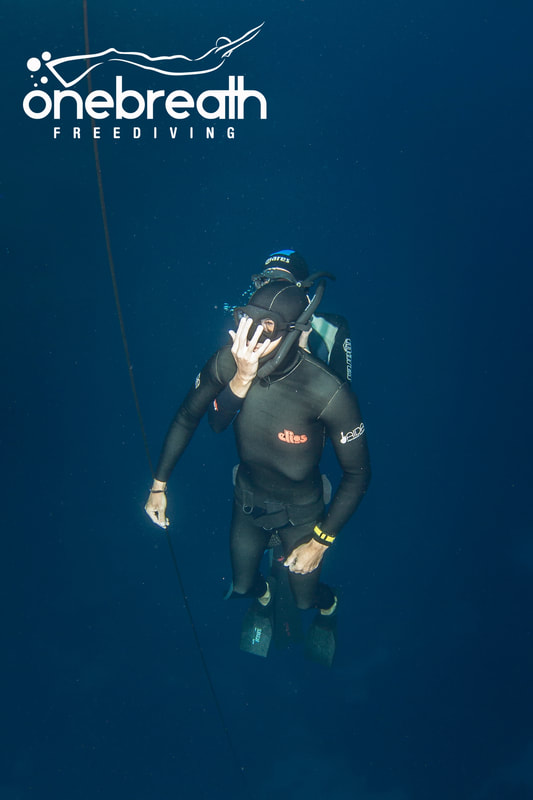
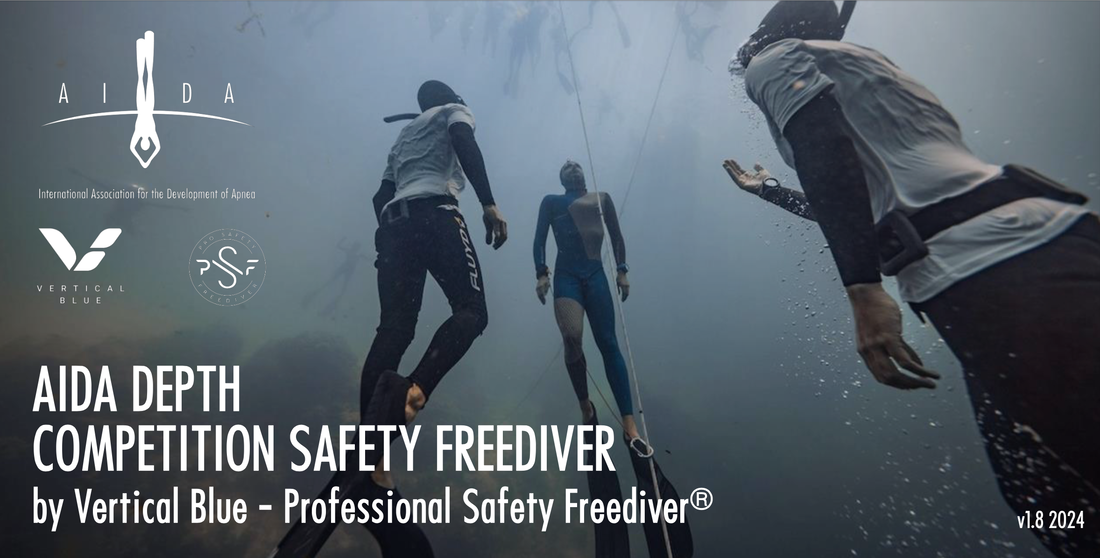
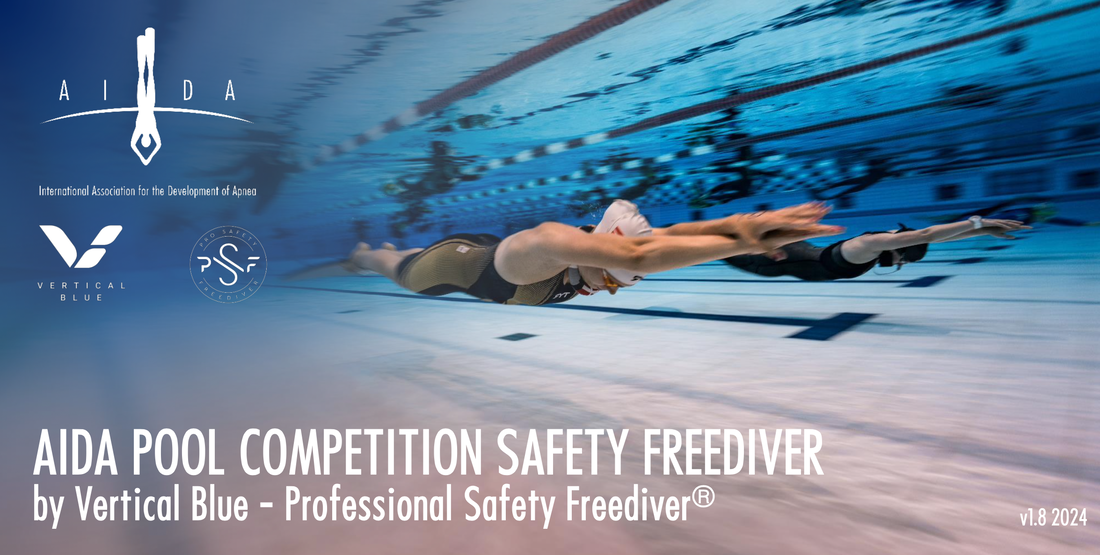
The AIDA Depth Competition Safety Freediver Course (alongside the Pool version) is a new course from AIDA with the goal of updating and standardising the role of the competition safety freediver to ensure the highest safety standards for future AIDA competition events. Going forward, all future safety freedivers will be selected based on initially having this certification and then a subsequent points system that signifies experience gained from prior competition safety freediver participation. Note: This course is only taught by a limited number of AIDA Instructors who are also AIDA Judges
What are the key physical and rescue components of the course? Fulfil the following physical requirements:
Initial impressions of teaching this course:
By David Watson, Owner, Founder & Head Instructor / AIDA Instructor Trainer at One Breath Freediving
|
AuthorFind out what One Breath Freediving is up to with the latest posts on this blog page. Categories
All
|